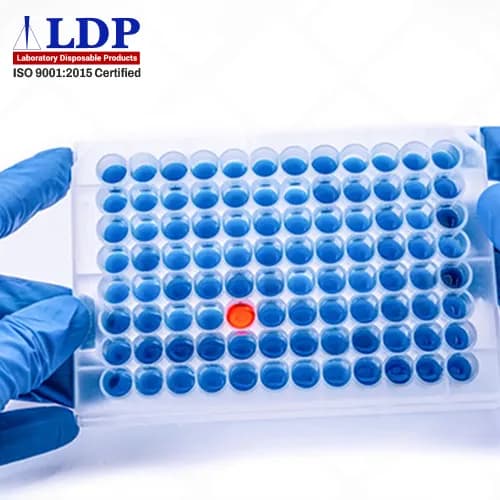
Maximizing Efficiency in Laboratory Experiments with Well Plates
On Saturday, 16 May 2026
In scientific research, well plates are extremely important to many laboratory procedures.
To aid in drug development, drug discovery, molecular biology, and diagnostics, automated workflows assist in saving time, resources, and finances. However, to achieve full optimization, a lab must integrate well plate automation streamlining or workflow enhancements.
Being a comprehensive guide, this post aims to improve overall laboratory experiment efficiency with well plates while specifically focusing on 96 well plates , 384 well plates , and 1536 well plates known for their high throughput screening metrics.
1. Choosing the Right Well Plate Format
Selecting the correct well plate format is akin to choosing the right foundation in laboratory optimization and workflow throughput. Consistency and accuracy throughout the processes require striking an equilibrium between resource allocation and accuracy, as well as balancing throughput.
- 96-well plate: This is a standard in most laboratories. It has great sample throughput and volume capacity.
- 384-well plate: Designed to minimize reagent usage per experiment, this plate is created for high-throughput screening.
- 1536-well plate: Used primarily for clinical or biotech labs during ultra-high screenings, this plate requires specialized lab automation systems.
With proper selection of well plate format, the laboratory workflow improves along with well plate optimization.
2. Well Plate optimization for accuracy and consistency
In terms of well plate optimization, accuracy, and consistency goes beyond just selecting a single format. Most, if not all, layout design, reagent dispensing, climate control, and many other components need to be maintained to an exacting level.
- Control wells that detect edge effects should always be strategically placed across the plate to maintain efficiency.
- Replicates are essential for achieving reliable data.
- Positioning and well-position bias can be eliminated through layout design randomization.
Designing the well plate increases reproducibility for results and reduces false positives during high-throughput screening tests.
3. Integrating Laboratory Automation
In manual well plate handling, human error and speed are two contributing factors. With the challenge, there is increased acceptance of laboratory automation hardware designed specifically for liquid handling systems in many laboratories.
These tools may include, but are not limited to:
- Liquid handling robots for fast and accurate pipetting.
- Automatic plate readers for detection of absorbance, fluorescence, and even luminescence.
- Robot arms and incubator stackers for productivity-enhancing continuous operation.
While manual task handling results in time-consuming, accuracy-compromising procedures, laboratory automation hardware standardizes procedures and streamlines workflow seamlessly.
4. Improving Pipetting Accuracy
Precision in pipetting is one of the most crucial considerations while carrying out assays, particularly in the well-plate format. Enhancing the result accuracy for successful experiments requires precise pipetting for 96 and 384- well plates .
For ensuring accuracy, the following tips may be of help:
- Correct identification of pipettes and automated systems is essential.
- Incorrect tip pre-wetting can result in variations from the standards.
- Viscous solutions necessitate the use of low retention tips.
Precision in pipetting affects well plate macroscoping techniques that yield high data quality with low variability which greatly improves the efficiency in the techniques optimization problem.
5. Cost-Effective Strategy with High-Density Plates
For cost-effective labs, minimizing reagent expenditure becomes pivotal. In this case, the advantage lies with the 384-well plates or even in 1536 well plates .
Benefits of this well plate include:
- Reduction in solvent volume per well.
- Increase in sample throughput.
- Ease of use with miniaturized assays.
In molecular diagnostics and drug discovery, these well plates enable automated systems for efficient high-throughput screening.
6. Changing the Environmental Factors
To maintain leveled well-placed assays, environmental factors are equally important. The overarching issues include temperature fluctuation and evaporation, particularly at the outer wells.
For these conditions, the following are suggested:
- Preventing evaporation with sealing films.
- Filling perimeter wells with buffer or sterile water.
- Cell-based assays of long duration require humidified incubators.
This procedure helps keep conditions uniform across the experiment, which minimizes external factors, thereby increasing the quality of the data collected.
7. Timely Calibration of Instruments
Pipettes, plate readers, and individual liquid-handling machines are just a few of the instruments that need to be interfaced with a well plate and need constant recalibration.
- Together with the well plates , these components require frequent sensitivity and linearity checks.
- Robotic systems have to be periodically checked for alignment and validation.
These actions improve strategy uniformity within the laboratory processes as well as the long-term optimization of the well plates .
8. Laboratory Automation Workflow Optimization
Laboratory workflows benefit from the addition of digital solutions. Today, Laboratory Information Management Systems (LIMS) have multifunctional capabilities and can perform things such as:
- Tracking of plate layouts and sample ID counters.
- Automated data collection.
- Inventory and schedule control.
Customized synergy geared towards fostering laboratory automation enhances the efficacy of the instruments when it comes to scaling and increasing the utilization of the well plates .
Summary: The Well Plate Holds the Key to Future Laboratory Efficiency
As noted, well plates alone and in combination with laboratory automation serve to improve the efficiency of an experiment in many ways. It does not matter whether it is choosing a plate from the 96, 384, or 1536 well plates ; every action is important. Integration of well plate optimization within the context of a streamlined laboratory workflow yields maximum output, repeatability, and cost effectiveness.
Considering well plates as components rather than merely tools of laboratory processes allows your laboratory to keep up with the evolving world of scientific exploration and development.
Choose LDP (Laboratory Disposable Products) for high-quality well plates to achieve great results in your laboratory.