Why HDPE Bottles Are the Trusted Choice for Laboratory Sample Storage and Transport
On Monday, 12 January 2026
In every laboratory or factory, how samples are received and stored directly adds to their integrity, safety, and regulatory acceptability. Over many decades, researchers have experimented with different kinds of containers, from glass to stainless steel. Yet HDPE bottles (High-Density Polyethylene bottles) remained to be adopted by laboratories and industries throughout the USA as their top preference. Its hardness, cost-effectiveness, and chemical resistance make it an ideal tool for the handling of an incredibly broad variety of materials from bulk chemicals to sensitive biological materials.
Understanding HDPE Bottles
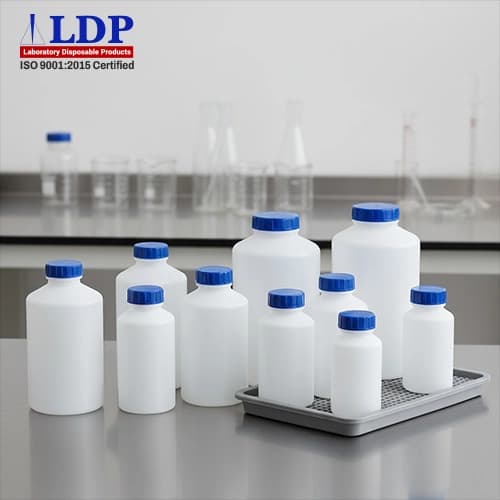
High-Density Polyethylene (HDPE) is a rigid thermoplastic polymer known for its hardness, tensile strength, and good resistance to chemicals. HDPE bottles are hard but lightweight, therefore highly suitable for the storage of liquids and solids. They are widely applied within research institutions, pharmaceutical shipping, chemical factories, and environmental testing laboratories. HDPE bottles come in various sizes, closures, and shapes, and can be tailored to suit the laboratory requirements for managing anything from small reagent samples through to bulk industrial chemicals.
Why Laboratories Prefer HDPE Bottles
The reason why HDPE bottles are popular is that they can preserve sample quality in a wide range of conditions. Among their most precious assets is chemical compatibility. While there are plastics that break down by coming into contact with acids, alkalis, or solvents, HDPE resists such interaction and ensures that the material inside remains intact. This is why they are especially used as chemical storage bottles for hazardous and sensitive materials.
Resistance to wear and tear is another benefit that sets HDPE bottles apart. While the glass bottle is fragile and will crack into pieces when handled or moved, the HDPE bottle is tough and will withstand impacts. This toughness ensures that samples are not damaged even when they are forced to be handled roughly during transportation or in the laboratory. In addition, the bottles contain secure, leak-proof caps, minimizing the risk of contamination and saving on costly spillage in transit.
Another feature that renders the high-density polyethylene bottle appealing to labs is its resistance to temperature. While not ideal for high heat such as autoclaving, the bottle is safe with temperatures ranging from -100°C to 120°C. They are thus appropriate for cold storage and transporting samples needing moderate thermal protection.
Finally, there is the economic aspect of HDPE. They are cheap and light, hence reducing transportation costs in general and making them an economical method of bulk buying. For industries and laboratories with huge inventories, such cost saving is a blessing.
Environmental and Practical Advantages
In addition to being durable and cost-effective, HDPE bottles are also eco-friendly. Being recyclable plastic (#2), they contribute to green lab practices. The majority of the suppliers, including LDP (Laboratory Disposable Products), now offer HDPE bottles made from post-consumer recycled plastic, hence enabling research institutions and organizations to reduce their carbon footprint.
Based on usability, high-density polyethylene bottles for scientific research are very flexible in their design. They come in narrow-mouth and wide-mouth varieties, some including graduation marks or labeling room for laboratory regulation. The above flexibility makes it possible for laboratories to choose bottles that fit particular workflows, including sample collection, reagent storage, or pharmaceutical packaging.
Applications of HDPE Bottles in Industries and Laboratories
HDPE bottles are commonly applied in:
HDPE bottles used for acid, base, and solvent chemical storage bottles
Environmental test sample collection bottles
Pharmaceutical shipping and packaging
Reagent storage containers
Laboratory biological sample handling
Industrial and manufacturing units that need secure storage of liquids
Why Use LDP for HDPE Bottles in the USA
If you are wondering where to buy affordable chemical storage bottles for sample transport? Laboratories all over the USA rely on LDP when it is a matter of purchasing high-quality HDPE bottles . LDP provides a range of chemical-resistant HDPE containers with tamper-evident and leak-proof caps for utmost protection. With varying sizes, shapes, and types of closure, LDP offers solutions to accommodate varied laboratory needs. Moreover, our affordable prices and bulk stock status ensure that we are a reliable companion for industrial as well as research customers.
Conclusion
For pharmaceutical factories, laboratories, and industries that demand reliability, HDPE bottles are the most convenient method for sample storage and delivery. They are unmatched in chemical resistance, strength, safe closing, and cost, yet environmentally friendly. Whether you are dealing with sensitive reagents, transporting pharmaceutical products, or storing industrial chemicals, HDPE containers provide the performance and reliability that today’s labs require. For best HDPE bottles for laboratory use in the USA, LDP is a trusted supplier committed to offering quality and compliance.
Frequently Asked Questions (FAQs)
HDPE bottles are light in weight, shatterproof, and chemical-resistant, whereas glass containers are heavier, brittle, and more susceptible to breakage during transit.
Yes. HDPE chemical storage bottles are resistant to acids, bases, alcohols, and most organic solvents, and thus are appropriate for hazardous chemicals.
Yes. HDPE bottles are resistant to very low temperatures, up to -100°C, thereby making them suitable for cold storage and transport of frozen samples.
Yes. HDPE (#2 plastic) can be recycled, and most manufacturers have ones made of recycled content available for environmentally responsible labs.
You can procure quality HDPE lab bottles from LDP that can be ordered in bulk at affordable rates with national shipping.
Disclaimer: All the information on this blog is published in good faith and for general information purposes only. The information contained in this blog might be provided on an “as is” based on Wikipedia, Google, and other scientific articles. We are not liable for any injuries or damages for the use of the information. Please do your research before you use this information for any purpose.