Rotary Evaporators: A Complete Guide for Laboratory Use
On Saturday, 16 May 2026
In today’s laboratories, Rotary Evaporators are the go-to devices for removing solvents, concentrating samples, and purifying them. Such equipment is typical in an organic chemistry lab, pharmaceuticals, and also in research and development centers. With rotary evaporators, complex evaporation processes can be done in a simple and functional way. This comprehensive guide explores everything you need to know from the purpose of rotary evaporators to how to use rotary evaporators in chemistry, ensuring your lab achieves optimal results every time.

What is a Rotary Evaporator?
A rotary evaporator (commonly known as rotovap) is laboratory equipment used for removing solvents from samples under reduced pressure. Solvent removal is a common step in the case of chemical synthesis, natural product extraction, and compound purification. This is done using a process that requires less heat, which makes it convenient for sensitive compounds. All in all, rotary evaporators are an indispensable device in these cases.
The Purpose of a Rotary Evaporator
A rotary evaporator is a device that helps remove solvents from fluid samples without damaging sensitive materials. In production and research labs, rotary evaporators are used to:
- Recover solvents for reuse
- Concentrate reaction mixtures
- Purify chemical samples
- Isolate active compounds from natural extracts
Rotary evaporators are a standard piece of equipment for any laboratory that values safety and precision during evaporation processes.
How Does a Rotary Evaporator Work?
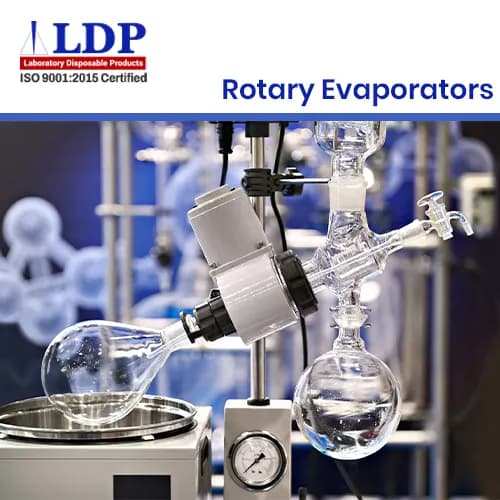
To understand how a rotary evaporators functions, let’s look at its parts and basic operation:
Receiving Flask: Collects the condensed solvent.
Rotating Flask: Holds the sample and spins continuously to increase the surface area.
Heating Bath: Supplies gentle heating to the sample, most commonly water or oil.
Vacuum Pump: Reduce pressure in the rotary evaporators system.
Condenser: Cools and condenses solvent vapors into the liquid.
The combination of these components allows for solvents with a low boiling point to be evaporated quickly and safely.
The Correct Way to Use a Rotary Evaporator: A Step-by-Step Guide
It is essential to know how to properly operate a rotary evaporator to ensure safety and achieve consistent results in the laboratory. Here is a straightforward guide:
- Set Up: Start by affixing your round-bottom flask containing the sample to the evaporator.
- Start Rotation: Commence the rotation to evenly distribute the liquid and maximize surface area.
- Vacuum Setting: Gradually apply vacuum to increase the boiling point of the solvent.
- Heat Bath: Activate the water or oil bath to the temperature set prior.
- Monitor Condensation: Watch the solvent condense in the cooling coils.
- Collect Solvent: Ensure that the condensed solvent is collected from the receiving flask.
- Stop Operation: Suspend the vacuum and rotation before extracting the sample.
Following this procedure ensures you understand how to operate a rotary evaporator safely and efficiently.
Advantages Offered by Rotary Evaporators
There are several distinct advantages to using a Rotary evaporator that enhance laboratory workflows:
Efficient Solvent Recovery
Saving cost and reducing waste.
Eco-Friendly
Reduced environmental impact by allowing the reuse of recovered solvents.
Improved Sample Purity
Enhanced precision by clean removal of unwanted solvents.
Enhanced Productivity
Accelerated rate of post-reaction clean-up.
Safety for Heat-Sensitive Compounds
Prevention of thermal degradation.
The ease of use of Rotary evaporators offers absolute value to any lab dealing with chemistry or scientific analysis.
Care and Maintenance
To always have Rotary evaporators perform at their best, remember to:
- Clean the glassware and the joints regularly.
- Inspect the vacuum seal and connection.
- Apply the use of suitable solvent traps.
- Avoid exceeding the fill level on the sample flask.
- Use custom PPE for every task.
Compliance with the mentioned practices assists in maintaining functionality, which in turn increases the lifespan of your devices.
Best Deals for Rotary Evaporators
If you are in need of top-quality rotary evaporators, look no further. LDP (Laboratory Disposable Products) offers a variety of laboratory consumables and rotary evaporators from reputable manufacturers. Our rotary evaporators guarantee precision, safety, and easy use for academics, researchers, or those working in industry.
Our team will ensure you have the best equipment by giving you options that will suit the volume of the lab, the type of sample, and the solvents used.
Conclusion
A Rotary evaporator is more than just a lab device; it’s a reliable partner in every stage of chemical preparation, from synthesis to purification. All of this is aided by the understanding of how does a rotary evaporator works, how to use rotary evaporator, and how to operate a rotary evaporator, which rotary evaporators boost lab workflows and safeguard delicate samples.
Here at LDP, we take pride in selling quality lab equipment like the Rotary evaporators. They help laboratories become more exact, safe, and innovative in the work that they do. To develop your lab’s efficiency further, check out our catalog or contact us for our expert recommendations.
Frequently Asked Questions (FAQs)
A rotary evaporator will aid in preserving sensitive compounds that are more difficult to extract. It does this by removing solvents with heat and using a vacuum to gently extract the compounds.
A Rotary evaporators will rotate and heat a sample while applying reduced pressure, which makes the solvent evaporate at lower temperatures. The evaporated solvent will condense into a separate collection container.
They are essential for post-reaction processing, concentration of reaction mixtures, solvent removal, and product purification. Hence, Rotary evaporators are routinely encountered in chemistry labs worldwide.
Flammable solvents like ethanol, methanol, and acetone can all be used. As always, check for compatibility and safety regarding use, and make sure to take caution with corrosive or explosive substances.
Like most devices that require the application of a vacuum, make sure to apply them gently, do not overfill the sample whilst paying attention to temperature and pressure, PPE, and wash your hands prior.